
Begin a Charlotte People Search
Choose the first official source by the fact already known. A current or former street address points to the Mecklenburg property search, POLARIS, and the deed index. A full name may fit the eCourts party search, a voter lookup, a business filing, or a professional board directory. An old address can be checked in a Hill city directory before moving to the modern parcel record. For a deceased person, an obituary, cemetery record, estate file, or will index may reveal relatives and earlier addresses.
Common names demand care. Keep middle initials, suffixes, date ranges, and record roles. Compare two or more facts before deciding that entries concern the same person. A parcel owner, voter, deed grantee, permit contact, and court party may each have a different link to Charlotte. One matching name is not enough.
- Write down the name exactly, then add variants, a date span, and any known address.
- Check Mecklenburg property and deed systems for an owner, mailing address, or recorded party.
- Search eCourts by party name and narrow the location to Mecklenburg County.
- Use library directories, newspapers, vital indexes, or estate files to extend the trail back in time.
- Ask the correct custodian for a focused record when the web search stops short.
Put results in date order. A directory publication, deed recording, court filing, voter registration, and current tax notice describe different moments. That timeline often separates people who share a name.
Charlotte Records Search Offices
Charlotte City Hall is not the keeper of every record tied to a Charlotte address. The City Clerk holds council, board, annexation, ordinance, and city program records. Mecklenburg County keeps land, marriage, local vital, tax, GIS, and trial-court files. North Carolina operates the statewide court, voter, business, corrections, and vital systems. The detailed rules for access, copies, and fees belong with the Charlotte public records system.
Mecklenburg Register of Deeds
Land, marriage, notary, and local vital services
Charlotte, NC
704-336-2443
Mecklenburg Court Clerk
832 E. Fourth St.
Charlotte, NC 28202
704-686-0400
The principal counters are in Charlotte because it is the county seat. Yet a postal address that says Charlotte may sit outside city jurisdiction. County GIS is the better test before sending a request to City Hall.
Search Charlotte Property Owners
Mecklenburg County property tools connect a street address or name to a parcel. The tax search supplies owner and bill context. POLARIS adds the parcel map, mailing and situs addresses, legal description, values, and deed links. A situs address is the land itself. The mailing address is where the tax notice goes. They may differ, and neither proves who lives at the property now.
Start at the Mecklenburg property search. Its main fields are owner name, street address, parcel ID, and an account or tax identifier. Search a surname without extra punctuation first. If an address is known, omit the unit unless the system indexes it. Then compare the current deed citation because online ownership can lag a recent recording.
| Search key | Best use | Check next |
|---|---|---|
| Owner name | Find parcels tied to a person or entity | Mailing address and deed citation |
| Street address | Identify the parcel and owner of record | Jurisdiction and situs |
| Parcel ID | Open one precise land record | Legal description and map |
| Book and page | Bridge the parcel to a recorded deed | Grantor and grantee chain |
Open the official property interface used in the Charlotte lookup.
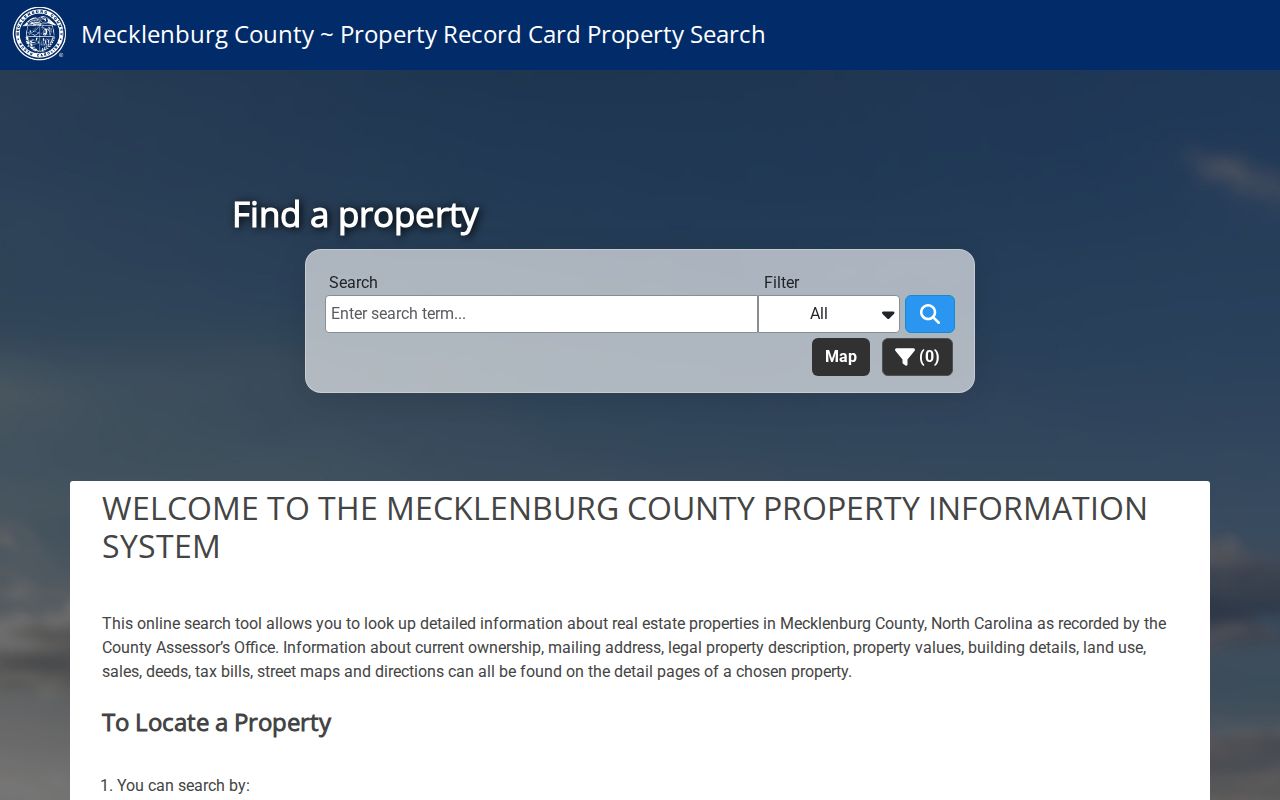
The result is a starting point. Verify a recent transfer in the recorded-document index.
Map Charlotte Records Geography
POLARIS means Property Ownership Land Records Information System. It offers more than 80 overlays, including zoning, floodplain, buffers, and historic districts. GeoPortal begins with an address and can add jurisdiction, voting information, school zones, public services, and elected representatives. Those layers solve a local problem: Charlotte as a mailing city is not the same as Charlotte municipal jurisdiction.
View the Mecklenburg POLARIS map and ownership search.
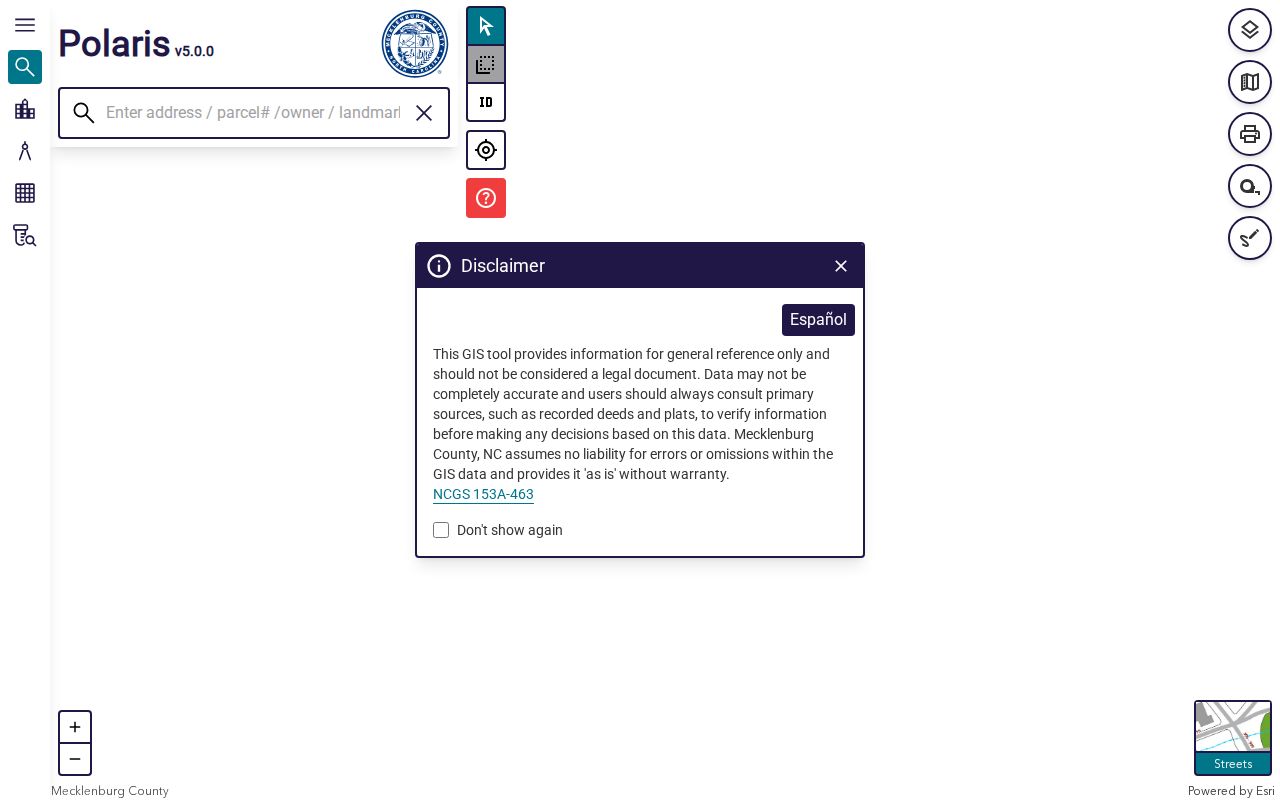
The map helps choose the right records custodian and follow land when a street name or number changes.
For older work, keep the parcel ID, legal description, and deed reference. Those identifiers survive address changes better than a postal label. A reverse directory or archival map can then connect a former street address to the modern parcel.
Trace Charlotte Court Records
North Carolina’s eCourts Portal searches public District and Superior Court cases by party name, case number, citation, attorney, or business. Filters narrow the county, case type, status, and filing dates. A result can show the case number, party roles, attorneys, events, hearings, dispositions, and public documents. A docket is the dated list of actions in a case, not proof that every allegation was true.
Mecklenburg County moved to eCourts on October 9, 2023. Older criminal, civil, estate, and special-proceeding images may still require a division email, courthouse terminal, paper file, or clerk request. The courthouse terminal can support some public searches not exposed in the ordinary web view. Sealed, expunged, juvenile, adoption, and other confidential matters remain outside public access.
| Record path | Charlotte coverage | Access route | Fallback |
|---|---|---|---|
| District and Superior Court | Civil, criminal, estates, special proceedings | eCourts Portal | Clerk email, counter, or terminal |
| City matters | Parking, code, and administrative records | City office or request | State court file if a case was filed |
| Federal court | Western District of North Carolina | PACER | Federal clerk |
Charlotte has no separate general municipal court case database. State trial courts in Mecklenburg County hold that court trail.
Verify Charlotte Vital Records
Mecklenburg County supplies local birth and death certificates and marriage records. North Carolina Vital Records supplies statewide birth, death, marriage, and divorce certificates. A divorce decree comes from the court file, while the state record is a certificate of the event. Certified birth and death copies are limited to qualified applicants under N.C.G.S. §130A-93. North Carolina does not use one simple rule that opens each record after a fixed number of years.
Statewide registration began in 1913. Earlier family research may depend on county registers, marriage bonds, church and Bible records, cemetery files, newspapers, wills, and city directories. A certified copy proves an event for official use. An index or newspaper notice can still be valuable for genealogy, but it is not the certificate.
- Certified copy
- An official copy issued by the record keeper to a qualified applicant.
- Index
- A finding list that points to a record without replacing the full document.
- Decedent
- The person who died and whose estate or death record is being searched.
- Grantor and grantee
- The party conveying an interest and the party receiving it.
Follow Charlotte Deed Names
The Mecklenburg Register of Deeds index is built around recorded parties. Search grantor and grantee roles, spelling variants, document type, and a restrained date range. A known book and page or instrument number opens a more exact route. Deeds, deeds of trust, releases, plats, easements, liens, and related notices can link a name to land or a transaction.
Use the Register of Deeds service hub to enter the official land-record route.
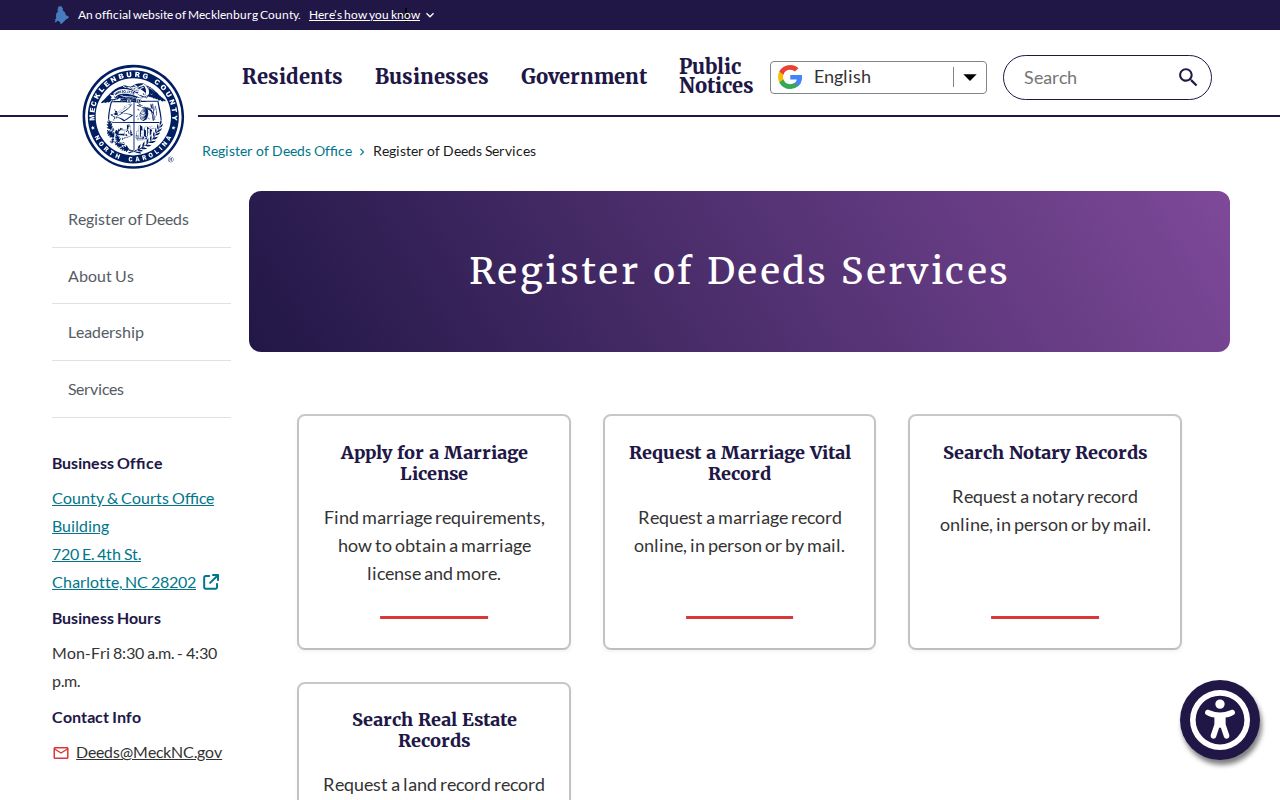
The hub separates marriage, notary, and vital services so a search does not land with the wrong office.
Recorded-land research reaches 1763 through historic and modern routes. The modern system begins in March 1990, while the older route covers the period through February 1990. A missing web result does not prove no record exists. Ask the Register about earlier books and use State Archives deed film when needed.
Search Charlotte Custody Records
The Mecklenburg Sheriff Arrest Inquiry covers recent public arrest and detention material. The research notes an online window of three years from arrest or release. North Carolina’s Department of Adult Correction search covers state prison and supervision records. The federal Bureau of Prisons locator reaches federal custody records from 1982. Each system has a different scope, so an absent result in one is not an answer for the others.
Open the Mecklenburg Sheriff Arrest Inquiry.
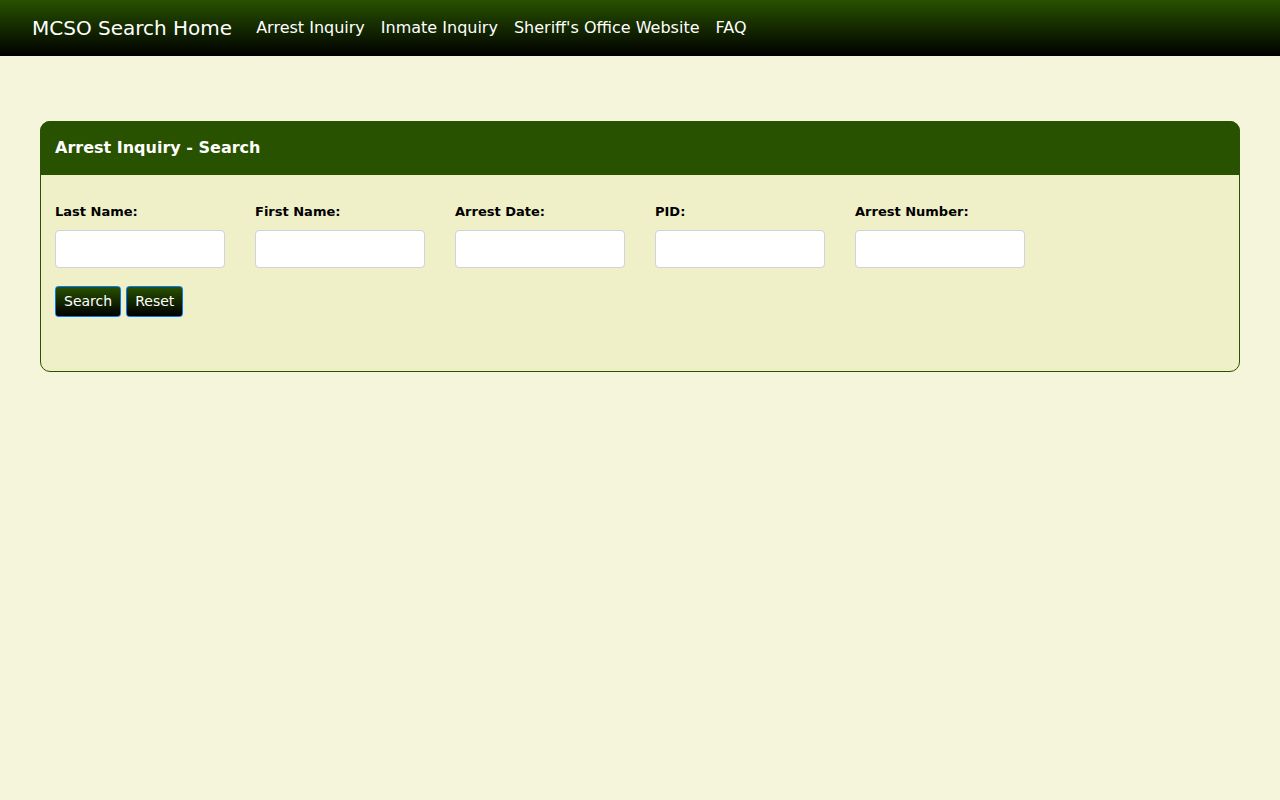
The inquiry is a public tool, but an arrest or charge is not a conviction and identity needs careful review.
The N.C. SBI registry supports name and geographic searches for registered adults. It may show a photo, offenses, and an address, subject to its warnings and sheriff reporting. Juvenile records are not public. Use official safety guidance and never use registry or custody data to stalk or harass anyone.
Review the official SBI search options and warnings.
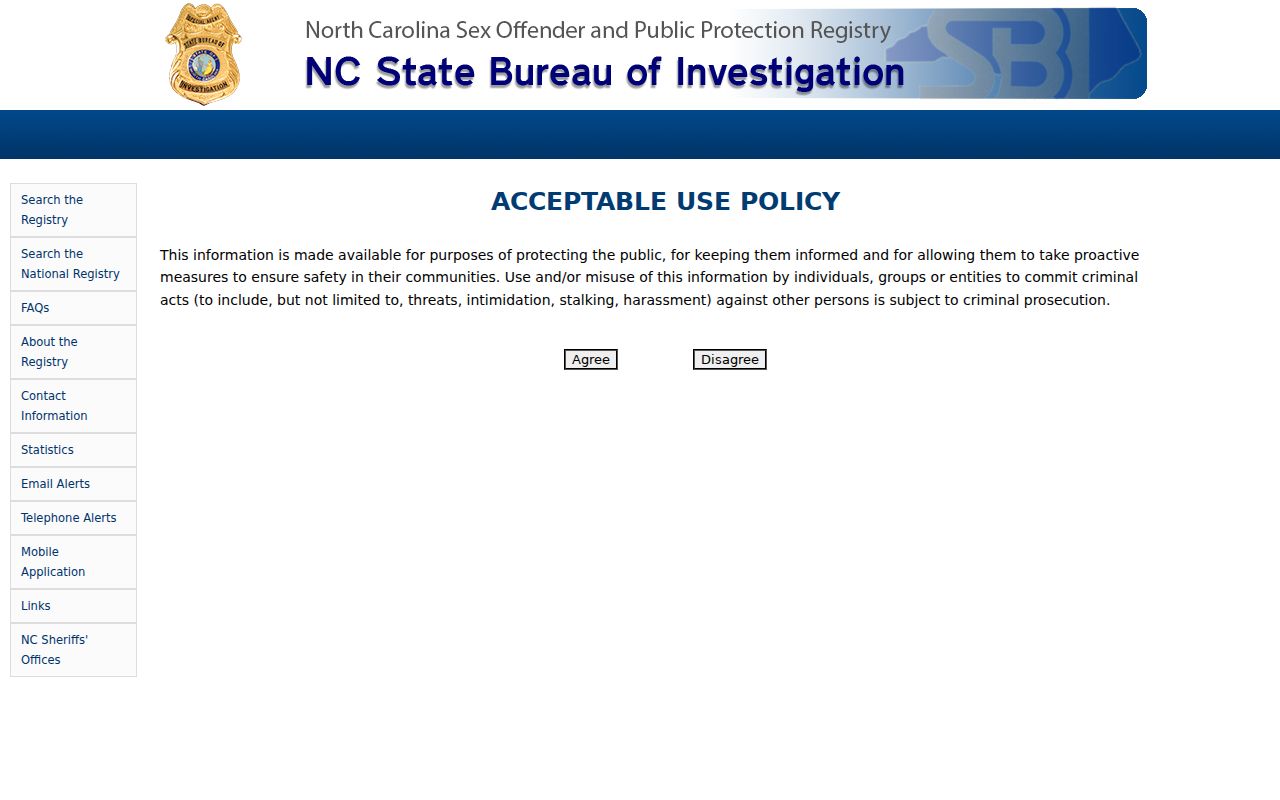
The geographic tool covers registered records. It does not represent every conviction or every resident.
Check Charlotte Voter Records
North Carolina’s individual Voter Search can confirm a public registration match by first and last name. A search may also use a middle initial, birth year, Mecklenburg County, and either registered or removed status. The public profile can show registration status, precinct and districts, polling place, a sample ballot when available, absentee information, and participation history. Participation means that a person took part in an election. It never reveals a ballot choice.
The statewide registration file offers a broader data route. NCSBE updates current files on Sunday evenings, and Mecklenburg County is county code 60. Public fields include names, public residence and mailing addresses, party, registration date, status, precinct, districts, and birth year or age. Dates of birth, Social Security numbers, driver-license numbers, registration-agency details, submitted email addresses, and voter-photo-ID copies stay confidential. Qualifying protected voters may also suppress an address.
A registration status does not prove where someone moved or where that person lives today. Compare it with a parcel, deed, court filing, or other dated source. The full search fields, weekly file steps, status codes, and privacy rules are covered in Charlotte voter registration records.
Reconnect Through Charlotte Archives
The Robinson-Spangler Carolina Room holds city directories, public and private school yearbooks, Mecklenburg newspapers, maps, photos, manuscripts, family histories, and government documents. Telephone and virtual help are available, while onsite use is by appointment. Staff research is normally capped at two hours per request, and fee-based work is listed at $15 per half hour.
Hill directories can be searched in more than one direction. The alphabetical part links a surname to an address and occupation. Street and householder sections can identify who was tied to an old address. Numerical telephone pages reverse a phone number. The 1940 example also includes apartments, schools, churches, cemeteries, government, and business listings. The complete physical year run has not been published online, so confirm a needed year with the library.
For a former classmate, combine CMS yearbooks and school directories with the Charlotte Observer archive, which reaches 1888. For a family line before statewide vital registration, add Bible records, church sources, cemetery files, will indexes, and estate records.
Note: Pre-1760 Mecklenburg wills are Secretary of State records, while county will jurisdiction begins in 1760.
Locate Charlotte Business Records
North Carolina’s Secretary of State Business Registration Search can connect an entity name to its status, registered agent, office addresses, and filing history. A registered agent is the legal contact for service and may not own the business. Search both the exact legal name and broad word combinations. Punctuation and corporate suffixes can hide a match.
An assumed business name adds another layer. The statewide assumed-name database begins December 1, 2017. Earlier Charlotte and Mecklenburg filings route to the Register of Deeds. UCC records search a debtor name, while professional license status remains split among the state’s separate boards. No one Charlotte license directory covers every local trade or profession.
A sound four-part check uses the entity filing, current and earlier assumed names, UCC debtor search, and the relevant license or permit record. Label each role. An officer, agent, debtor, contractor, or licensee is not automatically the beneficial owner.
Check Charlotte Unclaimed Property
NCCash is the North Carolina Treasurer’s official unclaimed-property system. A name search may show reported property context and a claim route. It can provide a last-known location lead when other current directories have gone quiet. It does not prove a present address, and a match still requires the state claim process.
Search the official NCCash name interface.
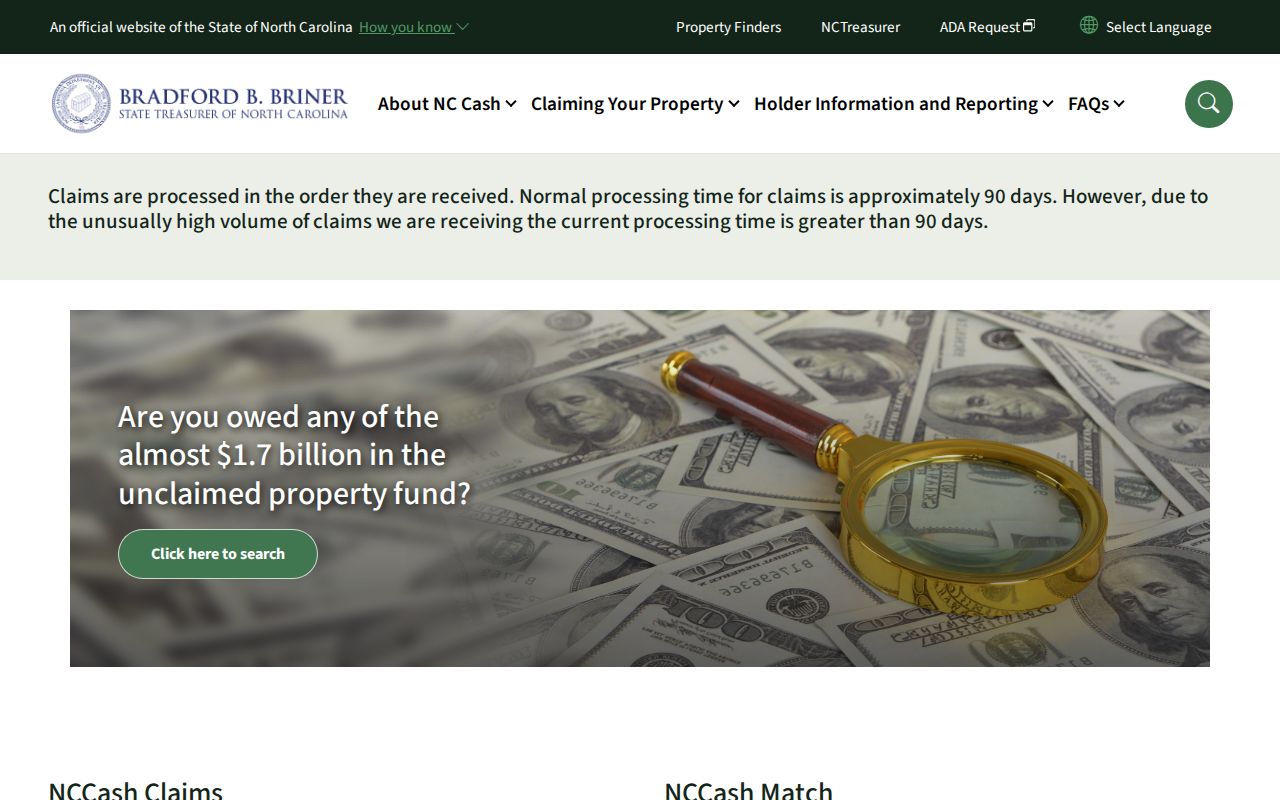
The state tool is free. Compare any match with a second official source before treating it as the same person.
| Source type | Strength | Main limit |
|---|---|---|
| Official record or directory | Defined keeper, fields, and update cycle | May be narrow, delayed, or restricted |
| Commercial compiled result | Can combine broad name, phone, and address leads | May be stale, merged, wrong, or paid |
| Historical source | Places a person at a time and location | Does not show current contact facts |
Protect Charlotte Search Privacy
Public visibility does not erase legal or ethical limits. North Carolina’s Chapter 15C Address Confidentiality Program gives qualifying relocated survivors a substitute address for new government records. Government files must not be used to defeat that protection. Protected voter addresses, sealed court material, adoption files, confidential vital fields, sensitive identifiers, and DMV personal information have separate controls.
North Carolina also permits a no-fee request under §132-1.10 to remove listed sensitive identifiers from a Register or Clerk website image. The request must identify the document, exact data, and location. It changes the public web image, not the underlying instrument. A commercial profile opt-out also does not erase a deed, parcel, court, voter, or business source.
Use records lawfully. Do not monitor, threaten, impersonate, stalk, harass, or harm another person. Confirm uncertain matches with the custodian.
When a portal fails, use the human route instead of trying to bypass a restriction. The Register counter, court terminal, elections office, City Clerk request system, cemetery phone line, and Carolina Room appointment all cover records that do not fit a simple name box.